A void beneath a concrete slab is a ticking time bomb for your structure. Without stable support, your concrete slab sinks and cracks, leading to costly structural failure. Resin void fill is the non-invasive, fast, and permanent solution that uses high-density polyurethane injection NZ to stabilise and secure your foundation, preventing further damage and restoring integrity.
Resin Void Fill for Concrete Foundations and Slabs
Schedule your free evaluation today!
When we say free, we mean FREE. No hidden fees and absolutely no pushy sales tactics. We will contact you within 24 hours!
What Is Resin Void Fill?
A void is simply an empty space or gap that develops beneath a concrete slab, footing, or foundation. In the context of structural repair, this gap is highly problematic because the concrete, which is designed to be supported across its entire base, ends up bearing its full weight on unsupported edges. This leads directly to cracking, sinking, and ultimately, a breakdown of the structure.
Common Repairs
How does Grace Foundation Solution carry out void fill work?
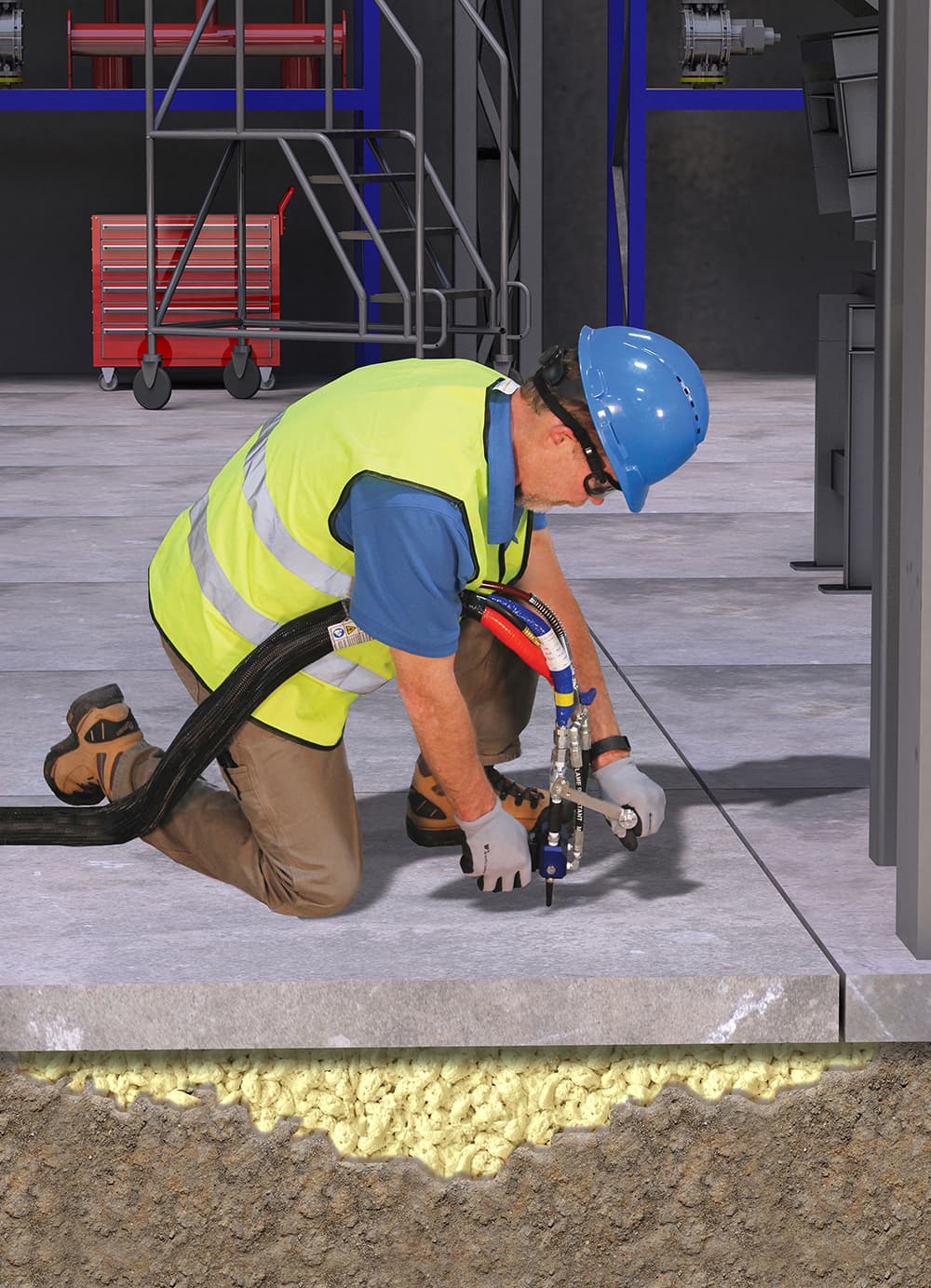
Void fill involves injecting a specially formulated polyurethane expanding foam into the voids. These products are suitable for many solutions. They can help with foundation support, filling unwanted underground services, and filling large voids.
We select materials based on the void size, location, and site-specific requirements. Our methods are usually more cost-effective than traditional alternatives and minimise disruptions, allowing businesses to operate seamlessly.
Why Choose us?
Smart Alternative to Costly Excavation
We use advanced resin injection technology to fill gaps under homes, driveways, commercial slabs, and infrastructure. This method avoids the mess and cost of digging.
Locally Focused, Auckland Expertise
Unlike nationwide firms, we specialise in Auckland’s soils, drainage issues, and unique ground conditions. That means tailored solutions, not “one-size-fits-all.”
Cost-Effective and Transparent
We provide transparent, upfront pricing without hidden extras. Because we’re leaner than the big corporates, our clients often save 15–25% on equivalent repairs.
Minimal Disruption, Maximum Strength
Most projects are finished in one day. They do not need to move out, close business, or remove landscaping.
Trusted and Guaranteed
Our solutions are backed by a workmanship warranty and trusted by homeowners, property managers, and commercial clients across Auckland.
What are the common causes of voids?
- Erosion and Washouts: Water leaks or poor drainage wash away fine soil particles beneath the slab.
- Soil Settlement: Poor original compaction of the sub-base, or long-term consolidation of soft soil, causes the ground to settle unevenly.
- Expansive Clay Movement: Auckland’s expansive clay soils shrink dramatically during dry periods, leaving large voids behind in house foundations.
- Liquefaction/Ground Movement: Seismic activity or heavy vibration can temporarily destabilise the soil, leading to rapid formation of voids.
Resin void fill is the process of injecting a liquid, expanding resin—a form of polyurethane—directly into this empty space. This lightweight, yet powerful, solution quickly cures to fill the void completely, providing renewed, stable support for the structure above. This is a crucial first step in many void fill foundation repair projects.
Common Questions about Void Fill Repair in NZ?
Schedule a free evaluation with Grace Foundation Solutions
Void fill repair means filling empty spaces under foundations, driveways, slabs, or floors. Erosion, poor compaction, leaks, or ground movement can cause these spaces. Needed when you notice sinking, cracking, or uneven surfaces.
Are you ready to learn more about what’s happening with your property’s foundation? Schedule a free consultation with Grace Foundation and ensure your foundation is in the best possible condition. Our experienced repair team will diagnose any issues and apply the appropriate solution to strengthen your residential or commercial foundation.
If a foundation resin injection doesn’t sound like the right option for your foundation, check our other foundation repair solutions and contact the team today.
Common Questions about Void Fill Repair in NZ?
Identifying a void early is critical for minimising the scope and cost of repair. A void doesn’t just put your structural slab repair at risk; it creates dangerous trip hazards and drainage issues.
Look out for these common warning signs around your property that indicate a need for void filling Auckland:
- Cracking in Slabs or Walls: Cracks appearing in the concrete floor, driveway, or in interior walls/ceilings above the slab.
- Uneven or Sunken Flooring: Sections of the floor, driveway, or patio visibly dip or feel bouncy when walked on. This is a classic sign of a need for underlying slab void repair.
- Water Pooling: Persistent water pooling around the foundation edge or on hard surfaces, indicating altered drainage flow caused by settlement.
- Gaps Under Driveways or Patios: Visible separation or gaps forming between the concrete and the surrounding soil or adjoining structures.
- Doors/Windows Sticking: If doors or windows that sit over the slab begin to jam or stick, it suggests that differential settlement has distorted the frame.
If you observe any of these symptoms, contact us immediately for a professional evaluation to assess the extent of the house foundation voids.
Void fill repair means filling empty spaces under foundations, driveways, slabs, or floors. Erosion, poor compaction, leaks, or ground movement can cause these spaces. Needed when you notice sinking, cracking, or uneven surfaces.
Depending on site conditions, expand resin polyurethane foams, cementitious grout, engineered resins, or lightweight concrete. Resin polyurethane foam is often favoured for its quick set, minimal disruption, and water resistance.
Pricing depends on the area’s size, the void’s depth, and the material you choose. For residential jobs, the typical range is $2,000 to $10,000. However, commercial or large projects can cost more. A site inspection is needed for accurate pricing.
Small jobs may take a few hours. Medium projects usually take 1 to 2 days. Large commercial projects may take longer. Foam injection cures in minutes. This allows for a quick return to use.
Small jobs may take a few hours. Medium projects usually take 1 to 2 days. Large commercial projects may take longer. Foam injection cures in minutes. This allows for a quick return to use.
High-quality polyurethane foam can last for many years. It resists moisture and decay. How long it lasts depends on the ground, drainage, and stability of the structure.
No, modern techniques like foam or resin injection are usually noninvasive. They use small drill holes instead of extensive digging.
Yes, resin polyurethane injection is often used after earthquakes in Christchurch and Wellington. It helps stabilise foundations and lift slabs. However, structural engineers may be needed for serious damage.
It depends on the cause. Sudden events, like burst pipes or earthquakes, are often covered. However, gradual subsidence or poor compaction usually is not. Always check your policy wording.
Our resin injection concrete repair process is non-invasive, highly controlled, and usually completed in a single day, causing minimal disruption to your home or business. This method is superior to older techniques, offering precision and durability for every slab void repair.
Here is our step-by-step process for effective concrete void filling:
- Site Assessment & Drilling: Our technicians conduct a precise floor-level measurement to identify the exact location and depth of the void. We then drill small (less than 16mm) access holes through the slab into the voided area.
- Injecting Expanding Resin Foam: A high-density, rapidly expanding liquid polyurethane resin is injected under pressure through the access ports.
- Foam Expansion and Void Fill: The liquid resin quickly expands up to 15 times its volume. This expansion fills the empty space (using expanding foam void fill), creating a dense, solid, and structurally stable base.
- Levelling and Monitoring: While the resin is injected, the technician continuously monitors the slab using lasers. If minor levelling is required, the expansion pressure can be carefully controlled to lift the slab gently back into place—a technique known as concrete lifting and void filling.
- Curing and Completion: The resin cures within minutes, providing instant ground stabilisation Auckland. The small injection holes are then filled, leaving the area immediately usable.
This non-invasive approach ensures there is no excavation and no mess, making it the perfect choice for sensitive commercial environments and busy family homes.
The durability and lightweight nature of the resin make it the preferred choice for long-term ground stabilisation Auckland. It provides a durable barrier against water penetration, securing your foundation against future washouts.